Camel Farms in and Around Abu Dhabi: Where to See, Feed and Experience Camels
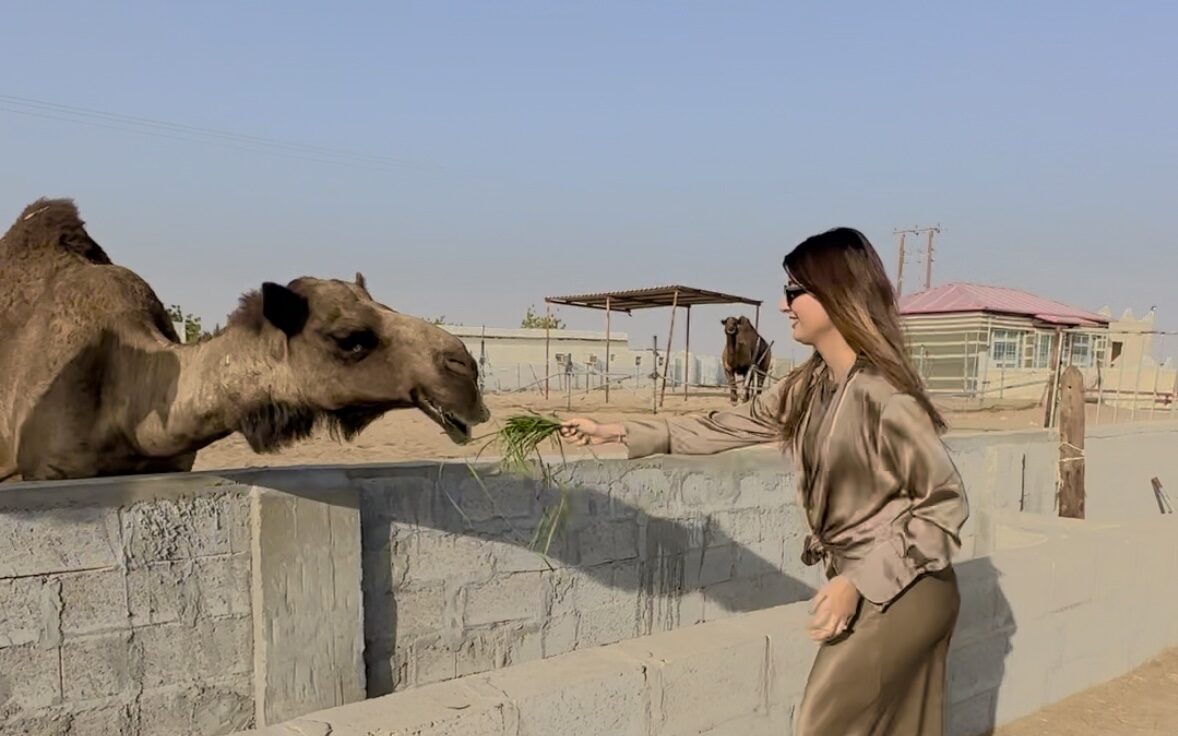
You don’t have to travel very far from Abu Dhabi’s skyline before the landscape begins to change. Drive towards Al Wathba, Al Khatim or Al Ain and you’ll start seeing desert farms, locally known as izbas, where camels remain very much a part of everyday life.
If you’re looking to see camels in Abu Dhabi, feed them, learn about Emirati camel culture or simply spend some time around these surprisingly gentle animals, there are several experiences worth knowing about.
One thing to keep in mind, however, is that not every camel farm you see on Google Maps is a tourist attraction. Many are privately owned farms, so visitors should always seek permission before entering.
1. Camel Farms Around Al Khatim
Area: Al Khatim, Abu Dhabi
Best for: Authentic desert farm experience, camel feeding and photography
Access: Private farms; arrange access beforehand or visit through a desert tour
Al Khatim is one of the first areas I would recommend if your idea of a camel experience involves actually getting away from the city.
The desert landscape surrounding Al Khatim Farms is dotted with agricultural properties and private izbas, many of which keep camels and other livestock.
Unlike a commercial petting farm, the experience here can feel much more connected to everyday desert life. Depending on the farm and permission from its owner, you may be able to see camels at close range and sometimes feed them.
Several Abu Dhabi desert safari operators also travel through the Al Khatim region. Capital Gate Tourism, for example, operates desert experiences between Al Khazna and Al Khatim that specifically include visiting a camel farm, seeing different camels and camel riding.
Tip: Don’t simply enter an izba because you can see camels from the road. These are generally private properties. Arrange your visit beforehand or go with an operator that already has permission.
2. Al Wathba Camel Farms and Ranches
Area: Al Wathba, Abu Dhabi
Best for: Exploring Abu Dhabi’s camel country
Access: Mostly private farms; contact individual farms before visiting
Al Wathba is another part of Abu Dhabi where camel culture is particularly visible.
The wider area contains numerous ranches and farms and is also home to Abu Dhabi’s best-known camel racing facilities.
One mapped farm is Barley Feeding Camel And Goat, located within Al Wathbah New Ranches. It is listed as a farm rather than a formal tourist attraction, so I would strongly recommend contacting the property before making a special journey or assuming walk-in access.
The real appeal of Al Wathba is the wider setting. Combine a pre-arranged farm experience with another stop in the area and you can easily turn it into a desert-themed morning outside the city.
3. Al Wathba Camel Race Track
Location: Al Wathba, around 45 km east of Abu Dhabi
Best for: Watching racing camels and experiencing Emirati sporting heritage
Entry to races: Free
This isn’t technically a camel farm, but it deserves a place on any Abu Dhabi camel guide.
Al Wathba Camel Race Track is one of the best places to understand that camels in the UAE are much more than desert animals-they’re also highly prized athletes.
Camel races generally take place during the cooler months, and mornings are the best time to experience the atmosphere.
Modern UAE camel racing is particularly fascinating because the camels race with small robot jockeys, while owners and trainers follow the action alongside the track.
Experience Abu Dhabi recommends arriving early, and entrance to the races is free.
If you’re interested in Emirati heritage rather than simply taking photographs with a camel, Al Wathba is worth adding to your list.
4. Al Ain Camel Market
Location: Zayed Bin Sultan Street, Al Ain
Distance: Approximately 15 km from central Al Ain
Best for: Seeing large numbers of camels and experiencing a working livestock market
Access: Pre-planned and supervised visits recommended
For a deeper look at camel culture, make a day trip to Al Ain Camel Market.
This isn’t a staged attraction. It’s a functioning livestock market where camels, goats and sheep are traded, making the experience quite different from visiting a tourist-oriented camel farm.
The morning is the most interesting time to visit, when trading activity is at its busiest.
Visitors can observe camel handlers and traders and see a variety of camels at close range. Because this remains a working market, official visitor guidance recommends pre-planning your visit and having it supervised by Camel Market staff.
Also avoid touching or feeding animals without permission.
The market is listed as operating daily, although published sources currently differ slightly on whether opening begins at 6 AM or 7 AM, so confirm the timing before travelling.
5. Umm Al Emarat Park Animal Barn
Location: Umm Al Emarat Park, Abu Dhabi
Best for: Easy camel feeding without leaving the city
Park Entry: AED 10
Animal Feeding: AED 10
Camel/Pony Ride: AED 15
If you don’t want to drive into the desert, this is probably the easiest option.
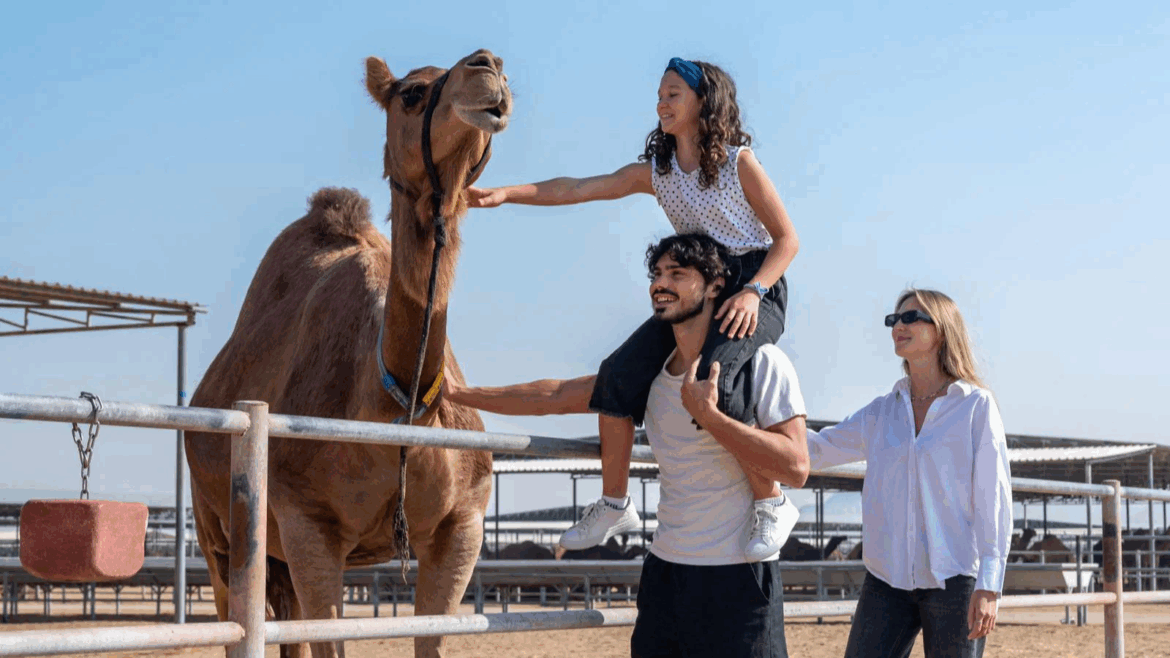
The Animal Barn at Umm Al Emarat Park includes camels alongside ponies, rabbits, tortoises, pygmy goats, horses and other animals.
Visitors can participate in animal feeding sessions, while younger visitors can also experience camel and pony rides.
It’s obviously very different from walking around an actual desert izba, but for families or anyone who simply wants a short camel encounter in central Abu Dhabi, it’s convenient.
The Animal Barn operates throughout the year.
6. Book an Al Khatim Desert Safari with a Camel Farm Visit
Location: Al Khatim Desert
Best for: Visitors who want guaranteed organised access
Experience: Camel farm + desert activities
If finding and contacting a private farm sounds complicated, booking a desert experience that explicitly includes a camel farm is the easiest alternative.
Capital Gate Tourism is one example listed by Experience Abu Dhabi whose Al Khatim desert programme includes a camel farm visit, an opportunity to see different camels and camel riding.
Other safari operators also work throughout the Al Khatim desert, so when booking, ask specifically whether the package includes an actual camel farm visit rather than only a short camel ride at the desert camp.
That distinction matters if the farm itself is what you want to experience.
7. Go Further: Camel Farms Around Remah and Al Ain
If you’re willing to drive farther from Abu Dhabi city, the desert areas surrounding Remah and Al Ain contain numerous camel farms and private ranches.
A mapped location called Camel Farm can be found around the Remah-Makhoola area, although publicly available information is very limited and it should not be treated as a confirmed walk-in tourist attraction.
Instead, think of this part of the emirate as another area where privately arranged camel experiences may be possible.
For a guaranteed visitor experience in Al Ain, I would choose the Camel Market rather than driving to an unidentified private farm.
Before Visiting a Camel Farm in Abu Dhabi
If feeding is permitted, use whatever food the owner or handler provides rather than bringing your own. Camels have specific diets, and a food that seems harmless may not be appropriate for them.
During warmer months, go early in the morning or later in the day. Desert farm areas offer very little shade and temperatures can become intense.
camel farms Abu Dhabi, camel farm Abu Dhabi, camel feeding Abu Dhabi, where to see camels in Abu Dhabi, camel experience Abu Dhabi, Al Khatim camel farm, Al Wathba camel farm, Al Wathba Camel Race Track, Al Ain Camel Market, camel riding Abu Dhabi, Abu Dhabi desert farms, camel safari Abu Dhabi, things to do in Abu Dhabi, unique things to do Abu Dhabi, hidden places Abu Dhabi, Emirati culture Abu Dhabi, UAE camel farms, camel farm UAE, Abu Dhabi desert experiences, things to do in UAE